Flower care
How to keep cut flowers fresh
A practical routine for fresh bouquets and finished arrangements, from the first trim to the last good stems. Know when to change the water, when to leave a design intact and which care shortcuts to skip.
On this page
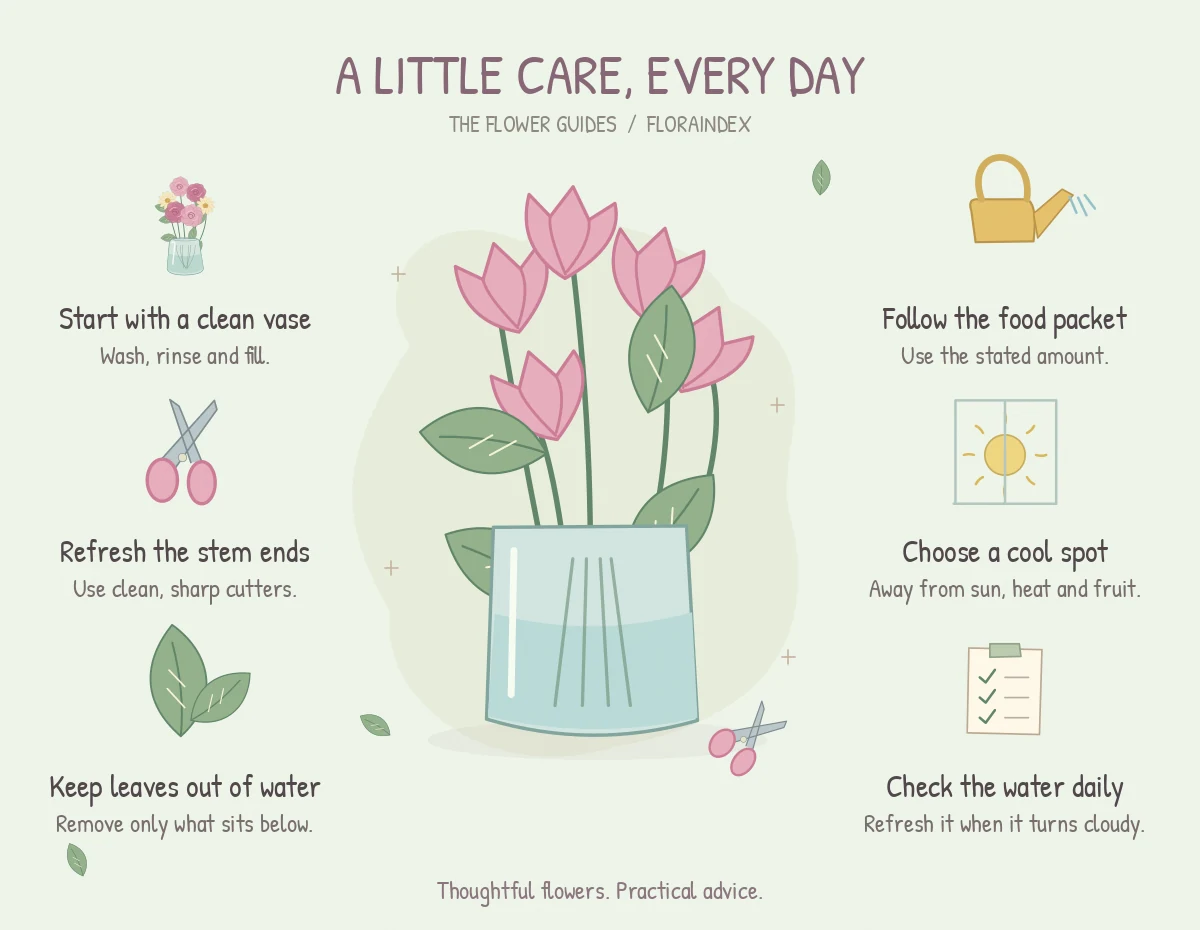
The best way to keep cut flowers fresh is to give their stems clean water, use flower food as directed, and keep the arrangement away from heat. A little attention each day is more useful than an elaborate rescue treatment once the vase has turned cloudy.
Start by checking how the flowers have been packed. Loose stems, a tied bouquet and a finished arrangement do not all need the same handling. The aim is to keep water reaching the stems without dismantling something the florist has already secured.
First, check what has arrived
Read the care card before cutting a ribbon or opening the base. A bouquet may have a temporary water bag hidden by its wrapping; a flower box may contain wet floral foam, a separate water reservoir or preserved flowers that must not be watered.
- Loose or wrapped fresh stems: have a clean vase and water ready before unpacking. Remove the transport wrapping and prepare the stems promptly.
- A bouquet in a water bag: follow the florist's unpacking instructions. Open or remove the water-filled packaging over a sink, not over a carpet or polished table. Do not assume a decorative transport bag is a permanent vase.
- Flowers already arranged in a container: look for the water opening and check whether the stems are secured by a grid, wire, a flower holder or foam. Do not pull the whole design out to give it the treatment intended for loose stems.
- Preserved or dried flowers: set aside the fresh-flower routine. Preserved products need their own instructions, not vase water or flower food.
If the construction is unclear, ask the florist where water goes. The outside of a box tells you very little about what is supporting the flowers inside.
Prepare the vase and stems
Put the vase, flower food and tools within reach first. That avoids leaving freshly cut stems on the counter while you look for a jug.
- Clean vase. Wash the container with hot, soapy water, including the base and any residue around the old waterline. Rinse thoroughly. A vase that looks clear can still have debris inside; use a brush if your hand cannot reach the bottom.
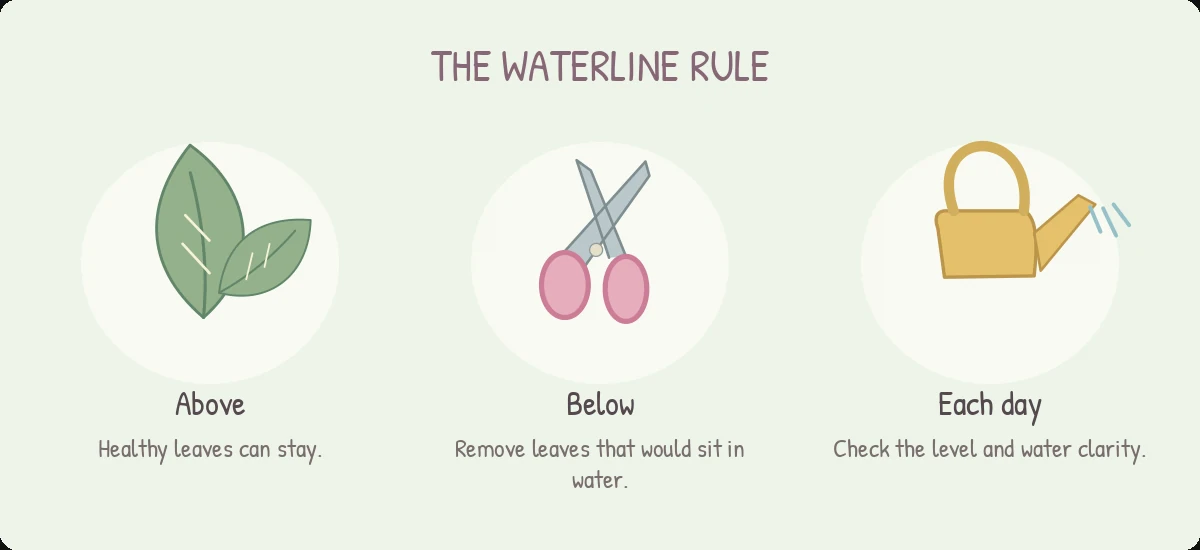
- Leaves above water. Remove foliage that would sit below the intended waterline. Submerged leaves decay and make it harder to keep the water clean. Keep healthy leaves higher up the stems rather than stripping everything away.
- Trim stem ends. Use clean, sharp floral snips or suitable shears to make a clean cut without crushing the stem. Iowa State Extension recommends removing the bottom half-inch to one inch. Check the vase height before cutting so the flowers remain supported.
- Water promptly. Place freshly cut stems into the prepared water without leaving them to dry. Check each stem reaches the water, including short filler stems tucked among longer flowers.
Choose a stable vase with enough room for the stems and enough water capacity to keep their ends submerged. If the bouquet is wedged so tightly into the neck that you cannot check or add water, use a wider container or divide it between two vases.
A hand-tied bouquet can often stay tied if it fits the vase comfortably and the tie is holding the design together. Remove decorative wrapping that gets in the way of the water or daily care. Do not cut through a structural tie simply because every bit of packaging looks removable; check the florist's instructions if you are unsure.
Use flower food correctly, not generously
Measure flower food. Read the packet's water volume and mix the solution accordingly. A sachet is not automatically the right amount for every vase. If your vase needs less than the packet's stated volume, mix the full amount in a separate clean jug using the stated quantity of water, then use what the vase needs. Follow the product's directions for any unused solution.
Commercial floral preservatives are formulated to supply carbohydrates and help keep the water clean. Adding extra powder is not a substitute for mixing it correctly. When replacing the vase water, prepare fresh solution at the labelled dilution rather than repeatedly adding powder to water of unknown strength.
No flower food left? Use clean water without additives while you obtain more. Iowa State Extension specifically advises against household substitutes such as sugar, aspirin, pennies, bleach, vinegar and soda. A spoonful of sugar is not the same thing as a formulated flower food.
Keep cleaning products out of the vase solution. Do not combine a cleaner with flower food or improvise a recipe from several household chemicals. For routine preparation, washing and rinsing the empty container is separate from making the water the flowers will stand in.
Make a small daily routine
Check water daily. Look at the level, not just the flowers. An opaque vase needs a deliberate check because it hides the waterline. Make sure the shortest stems still reach the water; a container can have water in its base while some flowers remain above it.
For a loose bouquet, a daily water change is a straightforward default, as recommended by Clemson Extension. Follow any specific directions supplied with your flowers or preservative. Change the water immediately if it turns cloudy or smells unpleasant, rather than waiting for your usual care time.
Lift a loose bouquet gently, keeping the stems together, and support it in a spare clean container while you wash and rinse the vase. Refill with fresh water and correctly mixed flower food if available. Room-temperature water is a sensible starting point for an ordinary mixed bouquet unless the florist gives more specific instructions.
You do not need to shorten healthy stems every time you briefly change the water. Recutting can be useful if the ends have deteriorated or the stems have been out of water; avoid trimming away so much that the arrangement no longer fits. Put the flowers back promptly and check their position against the new waterline.
Remove fading flowers and decaying foliage as you notice them. A mixed bouquet will not finish all at once. Taking out a spent stem is normal maintenance, not a sign that the whole gift has failed.
Choose a cool display place
A bright room is fine; a hot patch of direct sun is not the same thing. Keep the vase away from radiators, fireplaces, cooking heat and other warm appliances. Avoid the direct blast from heating or air-conditioning vents, fans and draughty windows.
Move the fruit bowl elsewhere, too. Ripening fruit releases ethylene, which can shorten the life of susceptible flowers. You do not need to turn a room into a laboratory: a stable, cooler spot away from fruit and strong airflow is a practical choice.
Do not automatically put a mixed bouquet in the household fridge overnight. Refrigeration can be useful for some flowers, but a food fridge may contain fruit and vegetables, and the florist may have species-specific storage advice. For ordinary home display, concentrate first on a suitable room position and reliable water care.
Care for foam and hidden reservoirs without pulling them apart
A finished fresh-flower arrangement still needs water even when you cannot see its stems. If the florist has used a hidden vase or liner, add water through the indicated opening, slowly, so it stays inside that vessel. Support the arrangement on a water-resistant surface while you work and stop before water spills over.
Wet floral foam both supports stems and holds water. Check it daily and replenish water as the florist directs; do not treat the foam as an unlimited supply. Pour into the designated watering area, not across the flower heads or the cardboard exterior. If you cannot see where the water collects, ask for a demonstration or a photo.
Leave secured stems in place for routine care. Pulling them out and repeatedly reinserting them can damage the support and loosen the design. Water changes may be possible in some arrangements, but do not tip or dismantle a fixed design to copy a loose-bouquet routine. The bouquet, vase and flower box guide explains these different constructions.
When flowers start to droop
Check the simple causes before reaching for a rescue trick. Is the water low? Are some stem ends above it? Is the vase beside a heater? Has submerged foliage begun to decay?
For loose flowers, correct the water level, clean the vase if needed, remove decaying material and make a fresh cut on affected stems before returning them to clean water. Move the arrangement to a cooler suitable position. This may help a thirsty flower, but it cannot reverse every kind of damage or restore a bloom that has naturally finished.
There is no single dunking, boiling-water or stem-crushing method suitable for every flower in a mixed bouquet. Special conditioning depends on the plant. If one kind is struggling while the others look well, ask the florist for advice about that flower rather than applying a dramatic treatment to the entire arrangement.
If flowers arrive badly wilted, broken or visibly damaged, photograph the condition and packaging promptly and contact the seller. Describe what you found and ask for care guidance or a resolution under its policy. Documenting the problem is more useful than attempting several treatments before explaining what happened.
Keep lilies away from cats
Do not bring true lilies, Lilium, or daylilies, Hemerocallis, into a home with cats. They can cause severe kidney injury. With Lilium, exposure can involve any part of the plant, pollen groomed from fur, or water from a vase containing the flowers. Putting the arrangement on a high shelf or removing visible pollen is not an adequate safety plan.
If a cat may have chewed a lily, contacted its pollen or drunk its vase water, contact a veterinarian or emergency veterinary service immediately. Do not wait for symptoms or try to manage the exposure with a home remedy.
Common flower names can be confusing, so ask for the botanical identity when necessary. A bouquet without these lilies is not automatically safe for every pet: other flowers and foliage also need checking. Tell the florist about animals in the recipient's household before agreeing to substitutions.
Enjoy the flowers that remain
When several stems have faded, move the good ones into a smaller clean vase rather than trying to preserve the original outline indefinitely. Recut them as needed for the new container and keep their leaves above water. A few healthy stems can make a pleasing small arrangement on their own.
No routine can promise a fixed number of vase-life days. Species, harvest stage, handling before delivery and conditions in the room all matter. What you can control is straightforward: clean equipment, prompt access to water, correctly used flower food and a daily look at what the flowers need.
Further reading
A little more help
Choosing flowers
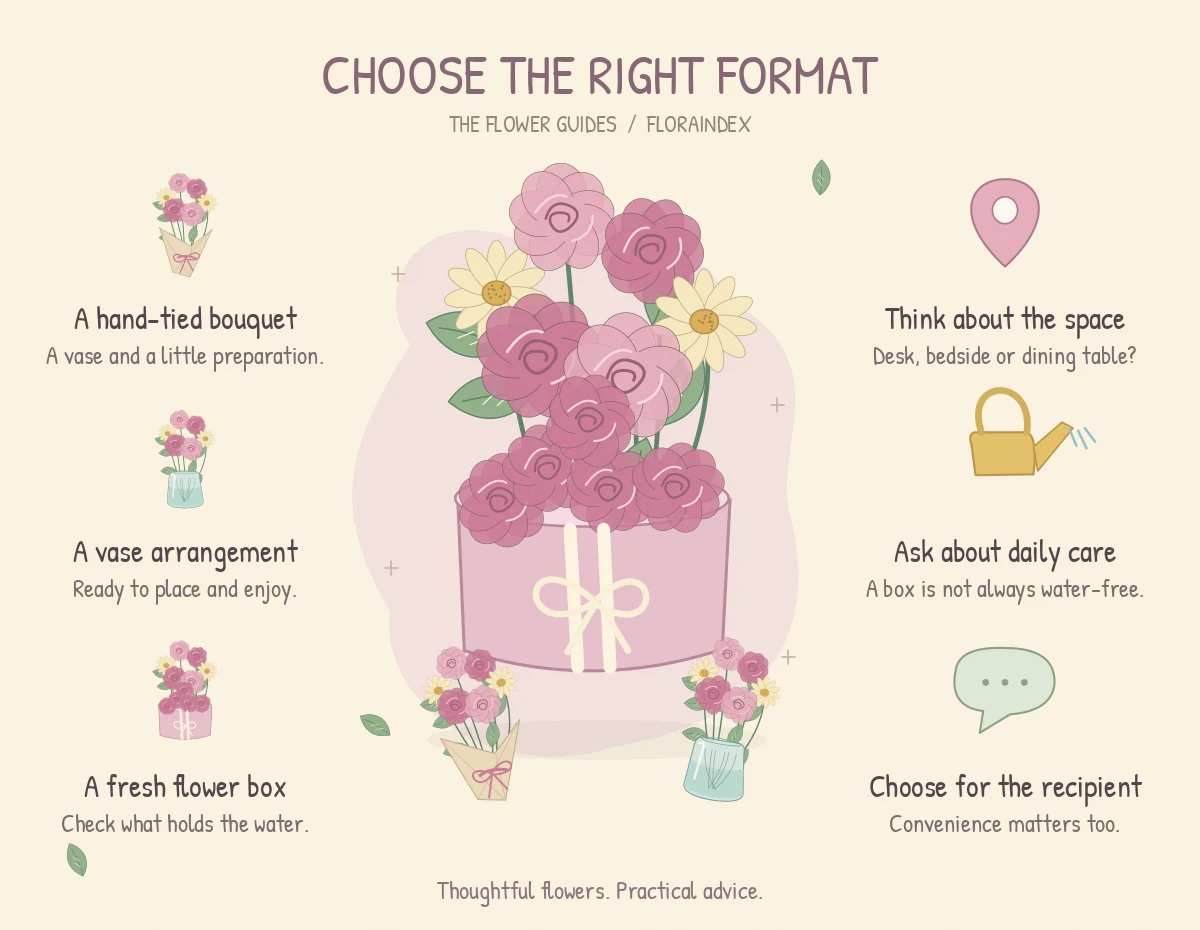
Bouquet, vase arrangement or flower box: what should you send?
Choose the gift that fits the recipient’s space and daily routine, not just the product photograph. Compare what arrives, what needs watering and what the recipient must do next.
Sending flowers
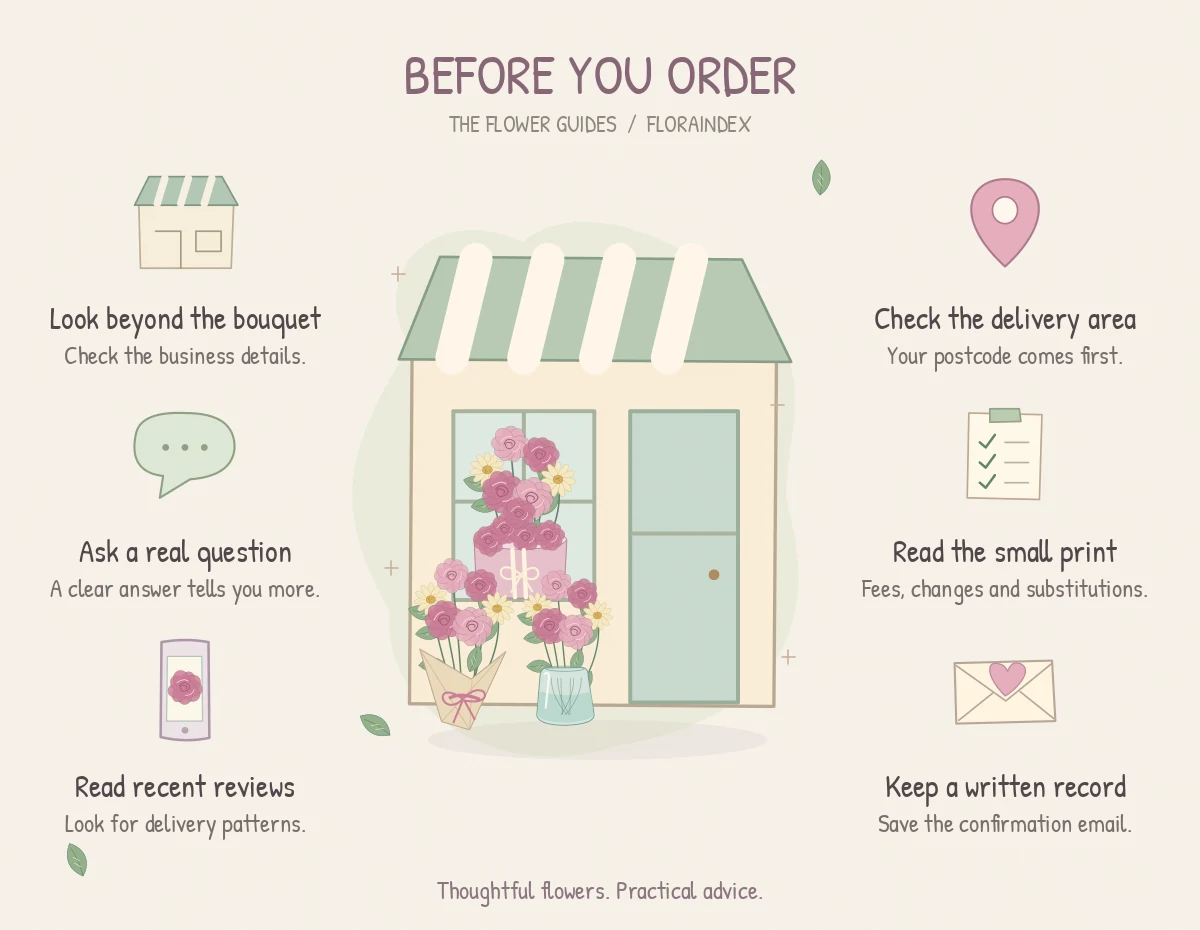
How to choose a reliable florist online
Judge the business behind the bouquet, not just its photographs or star rating. These checks help you compare the actual flowers, delivery promise and support you are buying.